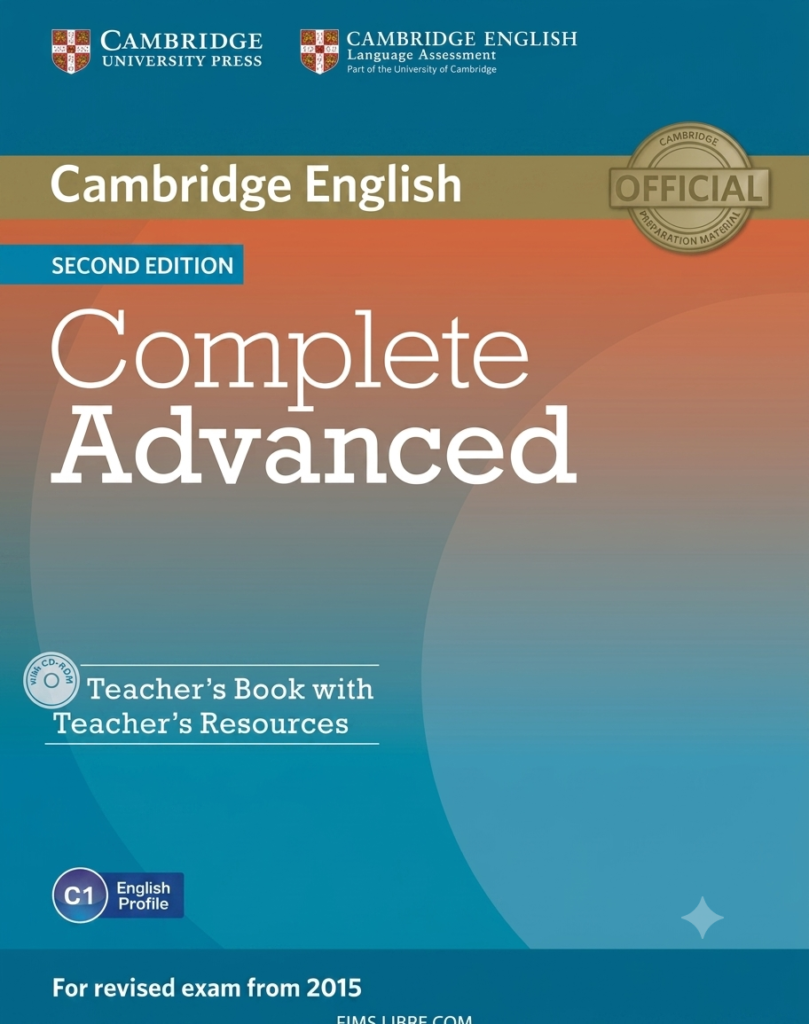
What are we actually looking at here?
So, to give you a basic idea, this isn’t the book your students are going to open in class. This is the heavy, behind-the-scenes resource manual published by Cambridge University Press that basically holds the keys to the entire exam kingdom. It has that blue and orange cover we’ve all seen a million times in staff rooms. Inside, it’s pretty much a massive breakdown of the C1 Advanced test structure, packed with all the lesson plans, photocopiable tests, and background answer sheets. It is essentially designed to stop you from staying up until 2 AM trying to invent your own advanced practice exercises from scratch.
The main idea behind it
The whole point of this guide is to explain the weird, specific logic that Cambridge uses to score the exam papers. It doesn’t just give you a list of high-level vocabulary words and expect you to know what to do with them. Instead, it systematically deconstructs the reading, writing, listening, and speaking papers. It gives you step-by-step scripts on how to run your classes, and it spends a lot of time pointing out the common traps that intermediate speakers fall into when they are trying to sound smart but screw up their prepositions or word order. It is definitely more focused on strategy than just dry grammar rules.
A few things I noticed that actually work well:
- The lesson timing guides are actually realistic: Usually, textbook time limits are a joke, but these ones give you a pretty fair estimate of how long a group discussion will take.
- The exam error archives: They included actual mistakes made by real students in past exams. Seeing where people normally mess up is incredibly helpful for planning your week.
- Detailed answer explanations: Thank goodness it doesn’t just give a letter key. It explicitly states *why* an answer works, which saves you during those awkward moments when a student asks a difficult question you weren’t expecting.
What you actually get out of it
If you spend enough time reading through these modules, you essentially learn how to spot the hidden patterns in the “Use of English” section, which is usually the part that makes everyone panic in the exam room. It trains you to instantly see how Cambridge tests things like inversions, phrasal verbs, and tricky collocations. From an educational perspective, it teaches you how to stop giving boring lectures about grammar and instead get your students to actually talk and debate using advanced sentence patterns without realizing they are even studying.
Who should look into this?
Look, if you are a teacher running a Cambridge prep course, you need this on your desk. Period. Trying to wing a C1 level class without the teacher’s script is just a recipe for disaster. But to be fair, I think this could also be a goldmine for highly independent, serious students who are self-studying at home. If you are trying to pass the CAE entirely on your own, having access to the official grading rubrics and exam logic inside this book will help you see exactly how the examiners think.
My completely unfiltered thoughts
Alright, time for my honest, personal take on this thing. I like it, but it definitely isn’t a flawless masterpiece. Sometimes I read through their suggested classroom conversations and think to myself, ‘Wow, absolutely nobody talks like this in the real world.’ It feels very academic, but I guess that’s just the nature of standard English exams, so you have to just deal with it.
The best part about it is that you can trust it 100%. Because it comes straight from Cambridge, you aren’t risking your students’ exam scores on weird, poorly phrased practice questions that won’t even show up on the real test. The notes on the speaking test are incredibly good too—they tell you exactly what kind of phrasing choices pull down a score, which lets you fix those bad habits early on in your sessions.
I don’t know why, but the layout is just so incredibly dense. If you open this book up when you’re tired, your eyes will literally glaze over. It looks like a software engineering manual with all the columns, small fonts, and sidebars crammed onto a single page. It takes a solid few weeks to figure out how to navigate it quickly. Also, some of the ice-breaker games they suggest feel like they were written by someone who hasn’t stepped into a room with real young adults in twenty years. They can be pretty cringey, so I usually just skip those entirely and do my own thing.
The final verdict
When you strip away all the corporate textbook marketing, the Cambridge English Complete Advanced Teacher’s Book is just a very heavy, serious, and deeply practical tool. It won’t make your coffee or teach the class for you, and it certainly won’t win any design awards for being fun to look at. But if you want to stop guessing what the examiners are looking for and give your students a rock-solid chance at passing their C1, it’s absolutely worth the investment. Just be ready to spend some time getting used to the packed layout before you try using it live.
📥 How to Download This Book
Click the button below to download this ebook in PDF format.
📚 Related Books
Join Our Facebook Learning Groups
🇩🇪 Learn German Free 🇬🇧 English Learning Group 🇪🇸 Spanish Learning GroupJoin our educational Facebook communities to improve your language skills, practice daily conversations, and connect with learners from around the world.